
Corrective exercise therapy
Exercises matched to the type of problem: work on body alignment, symmetry and the endurance of the postural muscles.
A teacher has mentioned that your child sits crookedly. Or you have noticed yourselves that one shoulder blade sticks out more than the other, and that trousers hang unevenly. The growing years are when posture changes fastest — in both directions.
We start with an unhurried examination: we look at posture, check trunk rotation in forward bending, and assess the mobility of the spine and hips and the alignment of the feet. We talk to the child too, not only to the parent.
After the examination we tell you plainly what we see and what it means: whether exercise and a change of habits will be enough, or whether an orthopaedic consultation is needed. The angle of the curve on the X-ray, bracing and surgical treatment are decisions for a doctor.
We match the methods to what the assessment shows — usually combining several of the following.
Exercises matched to the type of problem: work on body alignment, symmetry and the endurance of the postural muscles.
Gentle work on restrictions in movement, adapted to the child's age.
Reducing tension in the muscles alongside the spine, carried out by a therapist who works with children.
A set to work through at home, advice on setting up the study desk, choosing a school bag and suggestions for physical activity.
Re-assessment at agreed intervals — during the growing years the picture changes quickly.
Licensed physiotherapists with a PWZFz licence number.
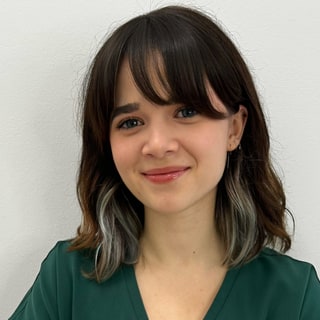
Yulia
MSc Physiotherapy
PWZFz no. 83011
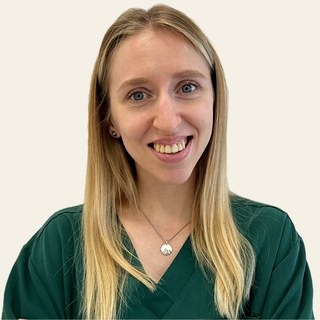
Anita
MSc Physiotherapy
PWZFz no. 86026
The symptoms below are not an indication for physiotherapy. If you have any of them, contact a doctor urgently or go to the emergency department (SOR).
If your condition suddenly gets worse, call 112. If we notice any of these signs during your assessment, we will not start therapy and will refer you to a doctor.
The items from our price list we use most often here. We discuss the final plan and the cost of therapy after your consultation — before you decide to start.
We work with children and teenagers. We match the scope of therapy and massage to the child's age — the price list has separate entries for the different age groups.
The aim of therapy is to improve body alignment, strength and mobility, and to keep track of how posture changes during the growing years. We do not promise to straighten a curve — bracing and surgical treatment are decided by a doctor on the basis of an X-ray.
It is not required for a consultation. If you have one, bring it with you. If the examination shows it is needed, we will ask you to arrange an orthopaedic consultation.
We agree the frequency after the examination. A large part of the work happens at home — the parent receives a set of exercises and guidance on how to check they are done correctly.
Symptoms often overlap — these pages may help too.
Low back pain, morning stiffness, pain when you bend — we look for the cause, not just quieten the symptom.
See detailsStiff neck, tight shoulders, headaches starting at the base of the skull after a day at the screen — we work on the cause and on your workstation.
See detailsPain on the stairs, when running and after long periods of sitting, swelling, a feeling of instability — we assess the hip and the foot too.
See detailsBook an appointment
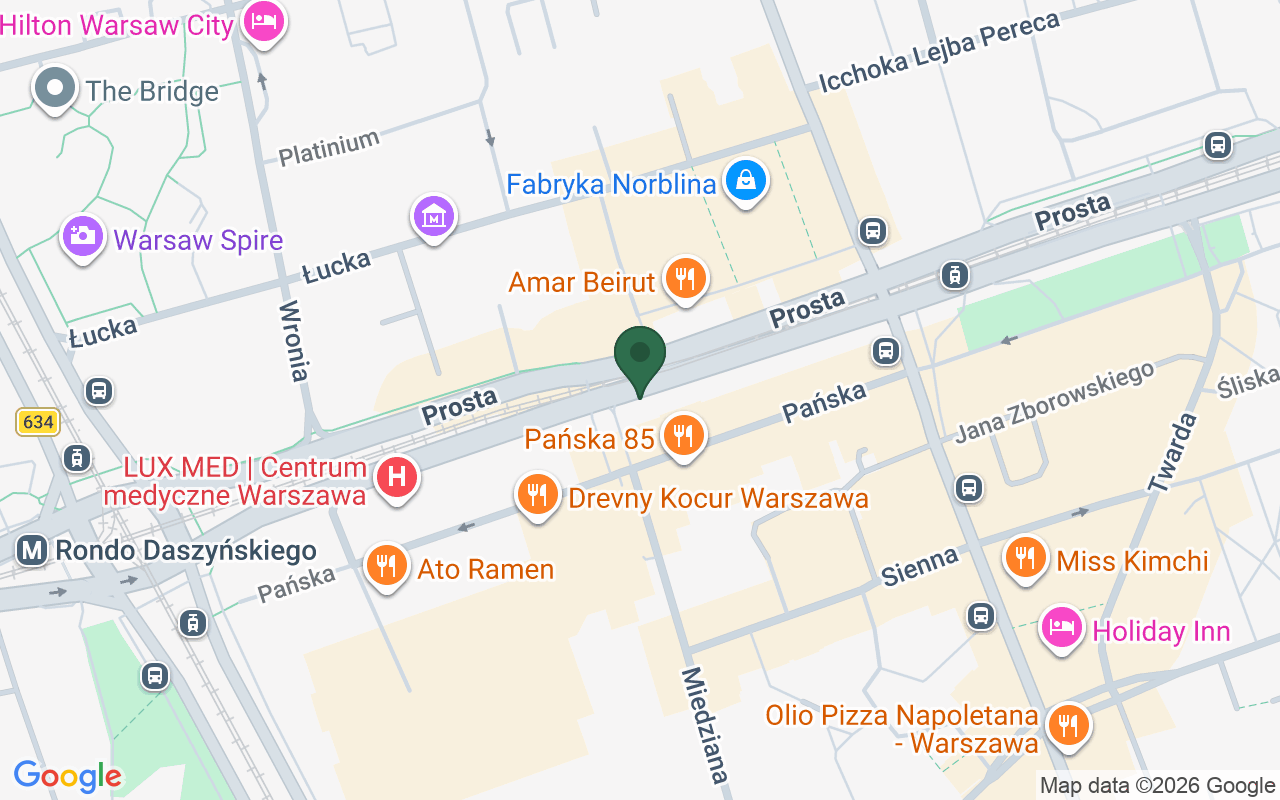
At your first visit we examine you, look for the cause and set out a therapy plan together with the expected cost. We see patients in central Warsaw, a few minutes from Rondo ONZ metro station.
Request
Leave your details — we call back the same working day, answer your questions and offer a consultation time.
Prefer to talk right now?
+48 573 323 068Contact
We're here to help you get back to full health.
This page is for information only and does not replace a medical consultation or an individual physiotherapy assessment.