
Staged exercise therapy
From regaining range of motion and control, through strengthening, to exercises specific to your own activity.
Surgery, or the day the cast comes off, is only half the journey. The other half is getting back your range of motion, your strength and your trust in your own leg or arm — and that is the part we go through together, step by step.
We work within the instructions given by your surgeon. Your discharge letter and post-operative protocol are our starting point — we do not rush stages on our own initiative and we do not change a doctor's instructions.
We judge progress by measurement: range of motion, limb girth, strength and movement quality compared with the healthy side. That way it is clear when you can move on to the next stage and when you need to stay with the current one.
We match the methods to what the assessment shows — usually combining several of the following.
From regaining range of motion and control, through strengthening, to exercises specific to your own activity.
Restoring mobility in the joint and in the soft tissue around the operated area.
Reducing swelling that persists after the procedure.
Support for a weakened muscle, most often the quadriceps.
The last stage: loads close to those waiting for you at work or in sport.
Support as you return to training and to heavier loads.
Licensed physiotherapists with a PWZFz licence number.

Yulia
MSc Physiotherapy
PWZFz no. 83011

Oleksandr
MSc Physiotherapy
PWZFz no. 70983
The symptoms below are not an indication for physiotherapy. If you have any of them, contact a doctor urgently or go to the emergency department (SOR).
If your condition suddenly gets worse, call 112. If we notice any of these signs during your assessment, we will not start therapy and will refer you to a doctor.
The items from our price list we use most often here. We discuss the final plan and the cost of therapy after your consultation — before you decide to start.
The timing is set by your surgeon in the post-operative instructions, and we plan our work according to them. If you are unsure, bring your paperwork — we will go through it together.
The time is individual and depends on your surgeon's protocol, on how healing goes and on your results in functional tests. We do not state a number of months in advance — readiness for sport is decided by the results of the assessment and by your doctor's instructions.
Yes, after hip and knee replacement, within the scope set out by your surgeon.
Yes, a referral is not required. It helps to bring your hospital discharge letter and your doctor's instructions.
Symptoms often overlap — these pages may help too.
Pain on the stairs, when running and after long periods of sitting, swelling, a feeling of instability — we assess the hip and the foot too.
See detailsDisc bulge and herniation, pain radiating into the leg or arm — therapy guided by your symptoms, not by the MRI report alone.
See detailsLow back pain, morning stiffness, pain when you bend — we look for the cause, not just quieten the symptom.
See detailsBook an appointment
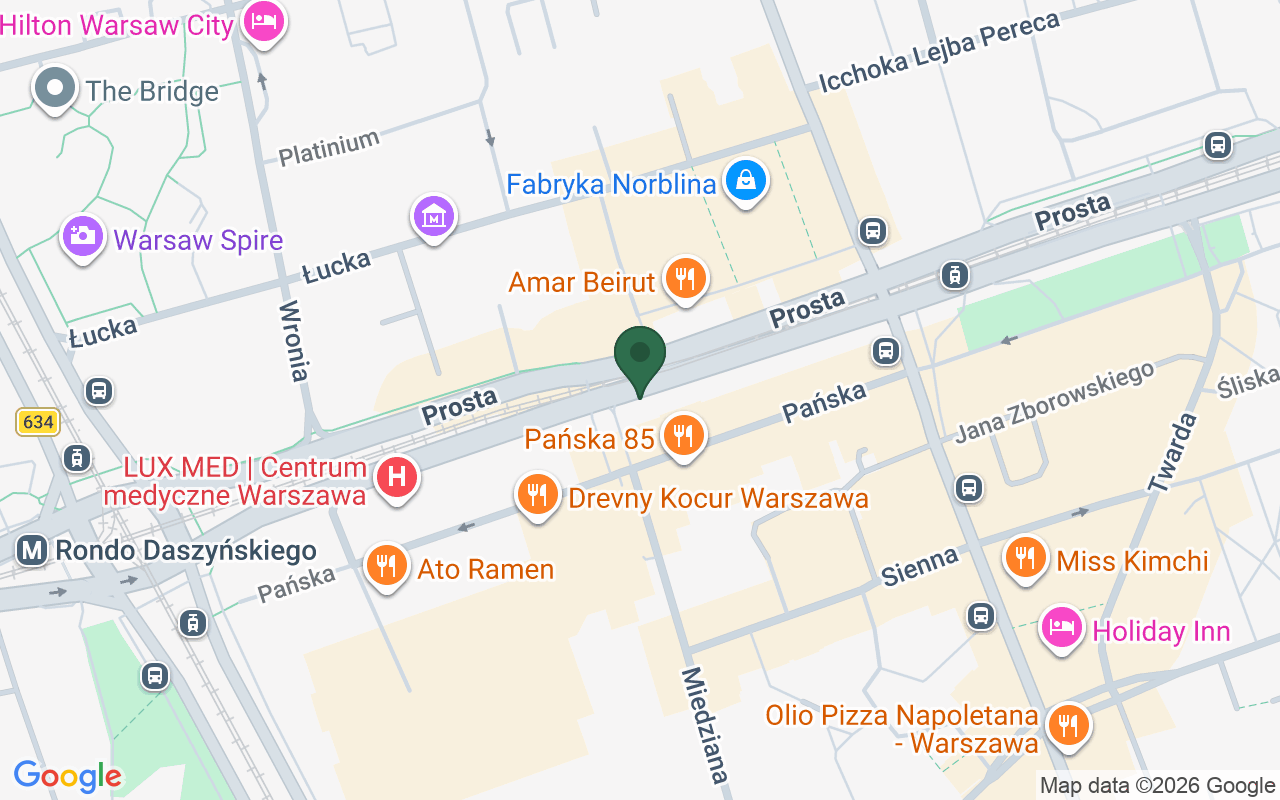
At your first visit we examine you, look for the cause and set out a therapy plan together with the expected cost. We see patients in central Warsaw, a few minutes from Rondo ONZ metro station.
Request
Leave your details — we call back the same working day, answer your questions and offer a consultation time.
Prefer to talk right now?
+48 573 323 068Contact
We're here to help you get back to full health.
This page is for information only and does not replace a medical consultation or an individual physiotherapy assessment.