
Kinesiotherapy and medical training therapy
Progressive strengthening of the quadriceps, the glutes and the calf — the foundation of therapy for most knee problems.
Your knee hurts going down the stairs, after a run, or simply when you have sat for a while with the leg bent. Sometimes it clicks, sometimes it swells. The knee rarely hurts on its own account — it usually pays the bill for what is happening at the hip, at the foot and in the way you move.
That is why we do not examine the knee joint alone. We check the strength of your gluteal and quadriceps muscles, the mobility of your hip and ankle, and what your squat, your lunge and your walking look like.
Therapy for most knee problems rests on progressive loading — manual techniques and physical modalities help reduce pain, but it is exercise that builds the joint's tolerance to load.
We match the methods to what the assessment shows — usually combining several of the following.
Progressive strengthening of the quadriceps, the glutes and the calf — the foundation of therapy for most knee problems.
Work on the patellofemoral joint, the hip and the foot, to take load off the painful structures.
Reducing tension in the iliotibial band and the thigh muscles.
Support for tendon problems and for weakness of the quadriceps.
Taking load off the kneecap or the tendon as you return to activity.
Licensed physiotherapists with a PWZFz licence number.

Anita
MSc Physiotherapy
PWZFz no. 86026

Yulia
MSc Physiotherapy
PWZFz no. 83011
The symptoms below are not an indication for physiotherapy. If you have any of them, contact a doctor urgently or go to the emergency department (SOR).
If your condition suddenly gets worse, call 112. If we notice any of these signs during your assessment, we will not start therapy and will refer you to a doctor.
The items from our price list we use most often here. We discuss the final plan and the cost of therapy after your consultation — before you decide to start.
Sometimes yes — at a reduced volume and after adjusting your technique or your footwear. We base the decision on the assessment and on how the knee responds to load over the following days.
We cannot reverse degenerative changes, but exercise and therapy can reduce pain and improve function. Exercise-based management is recommended as the first step in osteoarthritis of the knee.
No. If the assessment suggests a meniscus or ligament injury, we will refer you to a doctor for further investigation.
We look at the volume and intensity of your training, at your muscle strength and at the way you move in a squat and a lunge, and then build a progression that does not provoke the symptoms.
Symptoms often overlap — these pages may help too.
After ACL surgery, arthroscopy, a fracture or a joint replacement — regaining range of motion, strength and confidence in loading the limb.
See detailsLow back pain, morning stiffness, pain when you bend — we look for the cause, not just quieten the symptom.
See detailsUneven shoulder blades and waist, slouching, flat feet — posture assessment and corrective exercise for children and teenagers.
See detailsBook an appointment
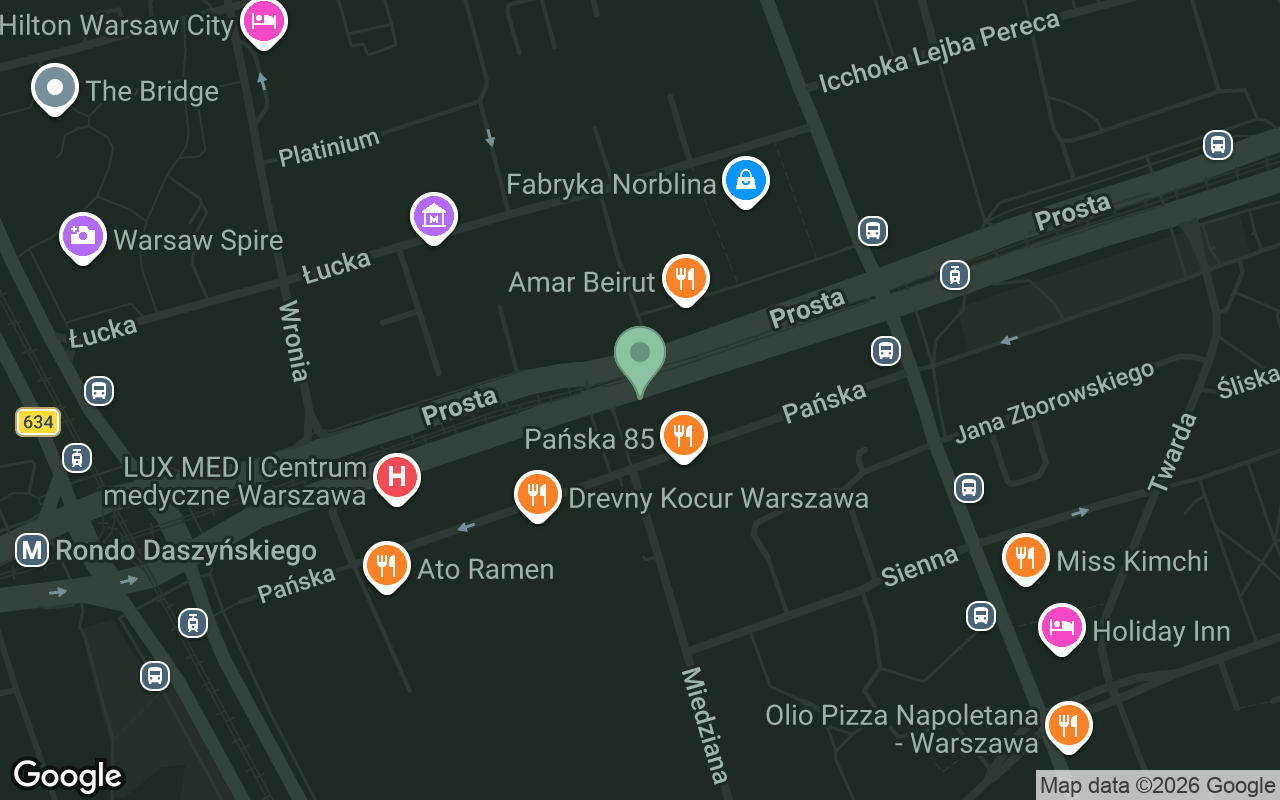
At your first visit we examine you, look for the cause and set out a therapy plan together with the expected cost. We see patients in central Warsaw, a few minutes from Rondo ONZ metro station.
Request
Leave your details — we call back the same working day, answer your questions and offer a consultation time.
Prefer to talk right now?
+48 573 323 068Contact
We're here to help you get back to full health.
This page is for information only and does not replace a medical consultation or an individual physiotherapy assessment.